
The short answer
Because Sunnyvale summers are milder than inland parts of the valley, a modestly sized, variable-speed system often beats a large one. Homes without usable ducts are frequently best served by ductless mini-splits or a heat pump that also handles winter heat.
Plenty of Sunnyvale households went years without air conditioning, relying on the cooler air that drifts in from the Bay. Then came a few warm summers, more people working from home, and upstairs offices that turned stuffy by mid-afternoon. If you are adding cooling for the first time or replacing a unit that has reached its limit, the choice of system matters more here than in hotter inland towns, because the goal is steady comfort on moderately warm days rather than brute force. We are based in San Jose, about 6 miles east, and install cooling across 94085, 94086, 94087 and 94089.
Do you need central air near the Bay?
Not every Sunnyvale home needs a whole-house system. The Santa Clara Valley has a Mediterranean climate, and areas near the Bay stay noticeably cooler in summer than the inland and southern parts of the valley. For some homes, cooling two or three rooms that overheat solves the real problem. For others, especially two-story houses or homes with large west-facing windows, central cooling is the right fit.
We start by asking which rooms bother you and when. A load calculation then tells us how much capacity each area needs, which keeps you from paying for equipment that will mostly sit idle.
Matching the system to the house
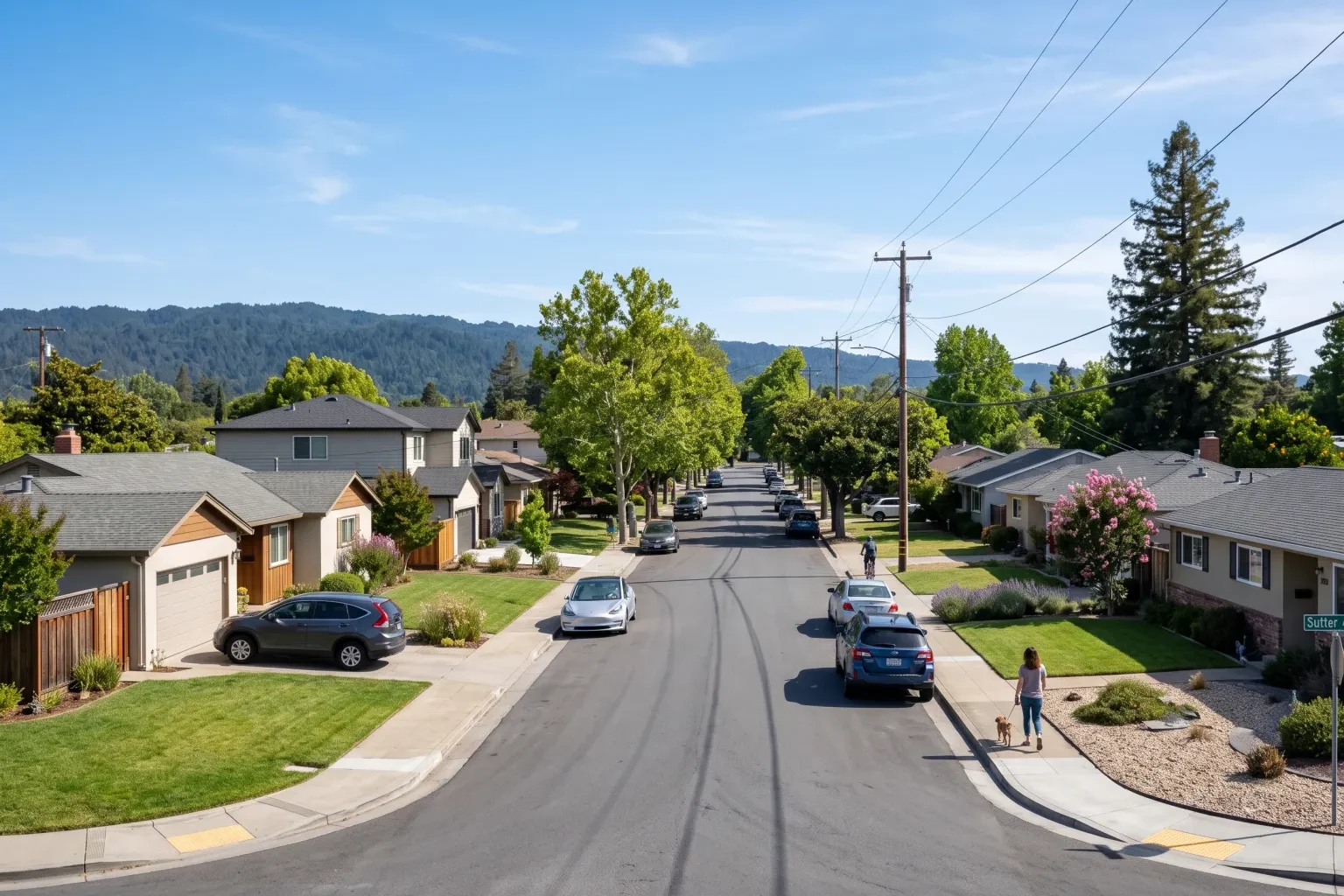
Sunnyvale has a wide mix of housing: postwar single-story homes, mid-century designs, newer two-story rebuilds, townhomes and condos. Each one points toward a different solution.
- Homes with a forced-air furnace and decent ducts: add a coil and outdoor unit, or replace both with a heat pump
- Homes heated through the floor slab or by wall heaters, with no ducts: ductless mini-splits, one head per zone
- Two-story homes with a hot upper floor: a second small system or a ductless head upstairs
- Townhomes and condos with HOA limits: compact condensers or wall-mounted ductless units placed where rules allow
- Additions and converted garages: a single ductless zone rather than extending old ducts
Why smaller and variable-speed often wins
A single-stage system sized for the worst few afternoons of the year spends most of the summer running in short bursts. That wastes energy, creates temperature swings and does little to control humidity. In a milder climate like Sunnyvale's, a variable-speed system that can run quietly at low output for long periods usually feels more comfortable and costs less to operate.
Variable-speed equipment also tends to be quieter outdoors, which matters on lots where the condenser sits a few feet from a neighbor's bedroom window.
Questions to settle before you sign
A good installation proposal answers more than which brand and model you are buying. Before work begins, you should know the details below, and we put each of them in writing.
- How the system size was calculated and for which rooms
- Whether existing ducts will be reused, sealed, resized or replaced
- Where the outdoor unit and refrigerant lines will run
- Whether your electrical panel needs a new circuit or more capacity
- How permits and inspection will be handled
- How the new thermostat will be set up and who will show you how to use it
Thinking about heat at the same time
If your furnace or wall heater is getting old, a heat pump can provide cooling now and replace your heating as well. Under Bay Area Air District Rule 9-4, gas furnaces manufactured from 2029 must meet a zero-NOx emission standard, which in practice points homeowners toward heat pumps when a furnace is replaced after that date. Working equipment does not have to be replaced, so a cooling-only installation next to a healthy furnace is still a reasonable plan.
Incentives come from local programs rather than the federal government now: the 25C credit covered heat pumps placed in service before December 31, 2025. Check BayREN and your local clean energy provider for current offers; funding changes by cycle, so we confirm what is active before quoting it. We also install cooling in Mountain View, Santa Clara, Los Altos, Cupertino and Saratoga.
More services in Sunnyvale
- AC Repair in Sunnyvale
- Heating Repair in Sunnyvale
- Heat Pump Installation in Sunnyvale
- Furnace Repair in Sunnyvale